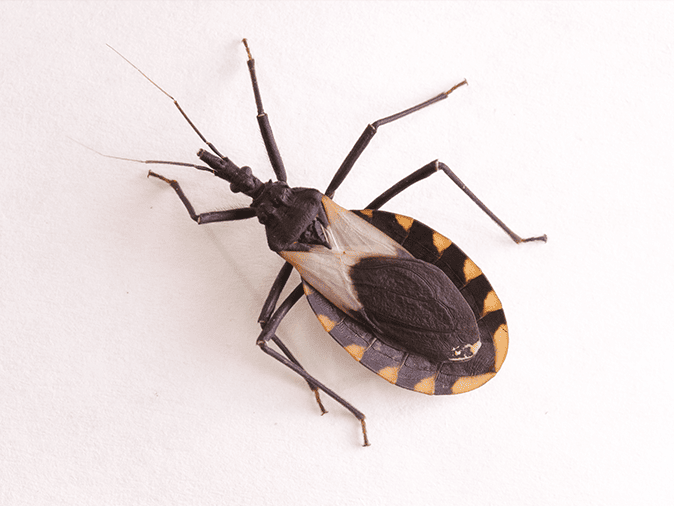
What Do Kissing Bugs Look Like?
Kissing bugs, also called conenose bugs, are black or dark brown pear-shaped bugs with cone-shaped heads, antennae, and stick-like legs.
When Are Conenose/Kissing Bugs Most Active?
Life Cycle of the Kissing Bug
Gradual metamorphosis
Eggs are laid in summer and take 3-5 weeks to hatch. Nymphs go through 5 stages requiring a blood meal and molting before entering the next stage. The nymph stage lasts through winter before entering the adult stage in the spring. Adults are capable of flying since wings are developed.
Feeding takes 20-30 minutes and 1 week to digest.
Are Kissing Bugs Dangerous?
Bites from kissing bugs can adversely affect individuals who are sensitive to their bites. Allergic reactions and even shock can occur when bitten by these bugs.
Where Do Kissing Bugs Nest?
Kissing bugs often nest in or near the nests of pack rats and other rodents. Usually attracted to porch lights, they may enter through doorways, gaps around doors and screens or up from crawlspaces. Once inside, they will hide under furniture, between mattresses, and in closets.
Habits of Kissing Bugs
- Diet: Blood feeders
- Activity: Feed at night and rest during the day, fly long distances to feed
- Preferred Climate: Temperate
- Defense: Large insect that can be intimidating.
- Cautions: Congregate around light sources. Humans sometimes have allergic responses. Spread Chagas disease through pathogen found in their feces. Brought into contact by rubbing affected area, eyes or mouth.
- Home Invasion: Occasionally enter homes. It is possible to wake up with mosquito-like bites and to find an engorged bug in the bed.
Helpful Hints for Kissing Bugs
In addition to securing ongoing pest control services, we recommend the following pest prevention tips for kissing bugs:
- Eliminate or minimize light sources around the home
- Remove rodent nests around the home
- Seal any gaps and cracks on the exterior of the house
Interesting Fact About Kissing Bugs
These pests are called kissing bugs after the South American species that prefers to bite sleeping victims on the face about the lips.
How Do You Get Rid of Kissing Bugs?
If you’re dealing with a kissing bug infestation on your property, contact Northwest Exterminating for effective pest control services!

Testimonials
Request Your FREE Estimate
Have questions or need help getting rid of kissing bugs or other pests? Simply complete the form below or give us a call!
Northwest Exterminating Blog & News
Rodent Exclusion: How to Keep Rats and Mice Out of Phoenix and Tucson Homes

Could El Niño Affect Pest Activity in Phoenix and Tucson This Fall and Winter?